
A few months ago, the Ekoparty Security Conference reached out to us, offering us to organize a Blockchain Security Village. You might not know, but matta used to be Head of Content and Ops Manager there a while back, and when in that role, always prompted tincho to provide content to the conference. That is why we always had a good relationship with them.
At that moment, and even now, we were with our hands full. The lead developer of the Phishing Dojo left, leaving us no choice but to divide our responsibilities between the two of us: tincho is mainly leading the Phishing Dojo, and matta is doing the rest of our initiatives, which is why you might have seen him more actively lately as well.
Despite our availability, he did not decline the offering. You'll see, when we say that we really don't want to create a community around the guild proactively, we mean it. Not because we don't want to find people with the same ethos, but because building communities takes time and responsibility. That is why we introduce ourselves and try to amplify the voices of existing communities, particularly in Latin America.
This is how we reached out to the WebtrES community (hence the ES for Español) to delegate and co-create the village —a community I'd say we are the most active in, probably the only one besides SEAL. If you go to their website, you'll see us highlighted as distinguished members.
The beginning
With the Village in motion, coordinated and led by @aibaf8 and @mapacherrera, we were motivated to support the initiative through financial aid, inviting acquaintances to participate, and even @d4rm_ gave a presentation as part of his internship with us.
But that wasn't the only thing that we ended up committing to. matta 3 years ago– shared with him two more propositions: an interview to rememorate old times, and an invitation to participate in the Hack The Talent Zone to share his personal experience in web3.
WebtrES Village 0x01
Many things happened in the village! Here's a day-by-day summary the team sent us to share with you.
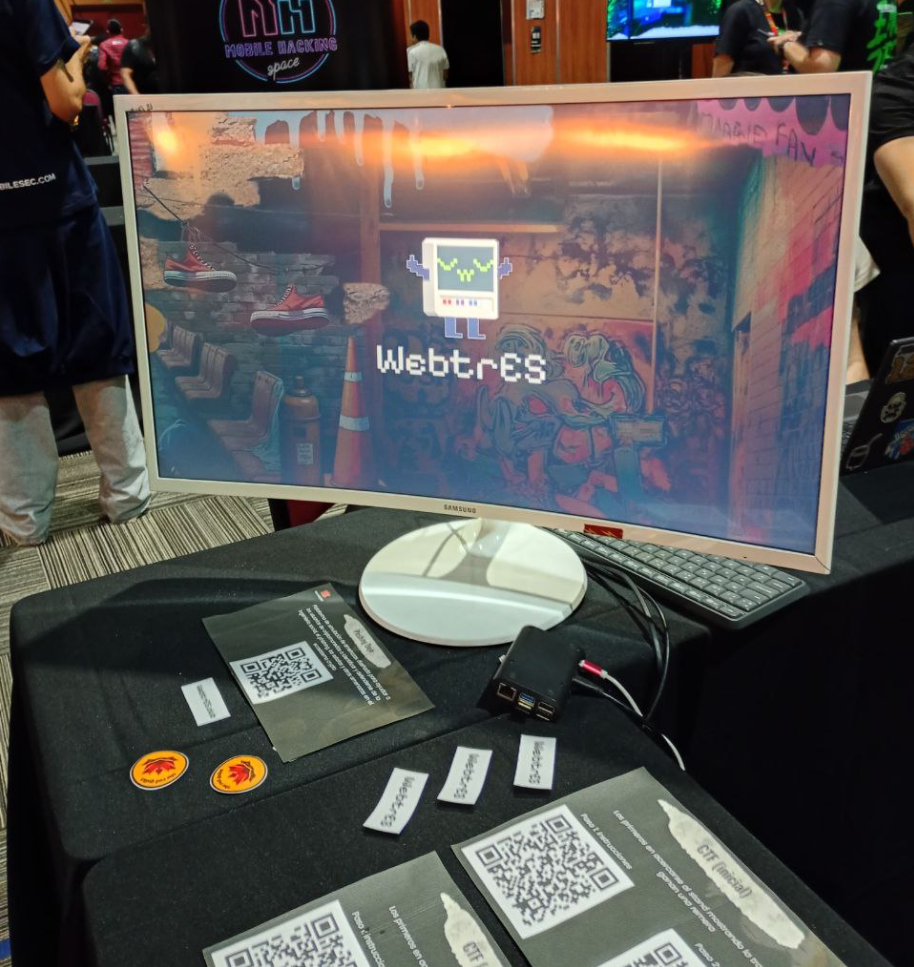
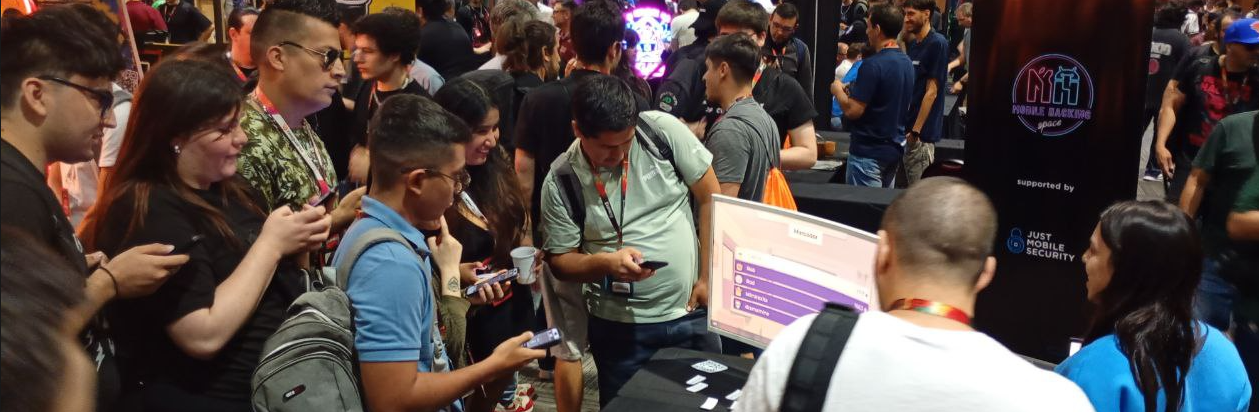
🗓️ Day 1
We kicked off with trivia games, raffles, and the launch of the beginner-level CTF.
The day opened with the talk “Beyond JWT: Authorization Without Identity Using ZK Proofs” by @crypto_dev_1, which sparked great interest among the audience and served as an excellent introduction to the world of zero-knowledge proofs (ZK).
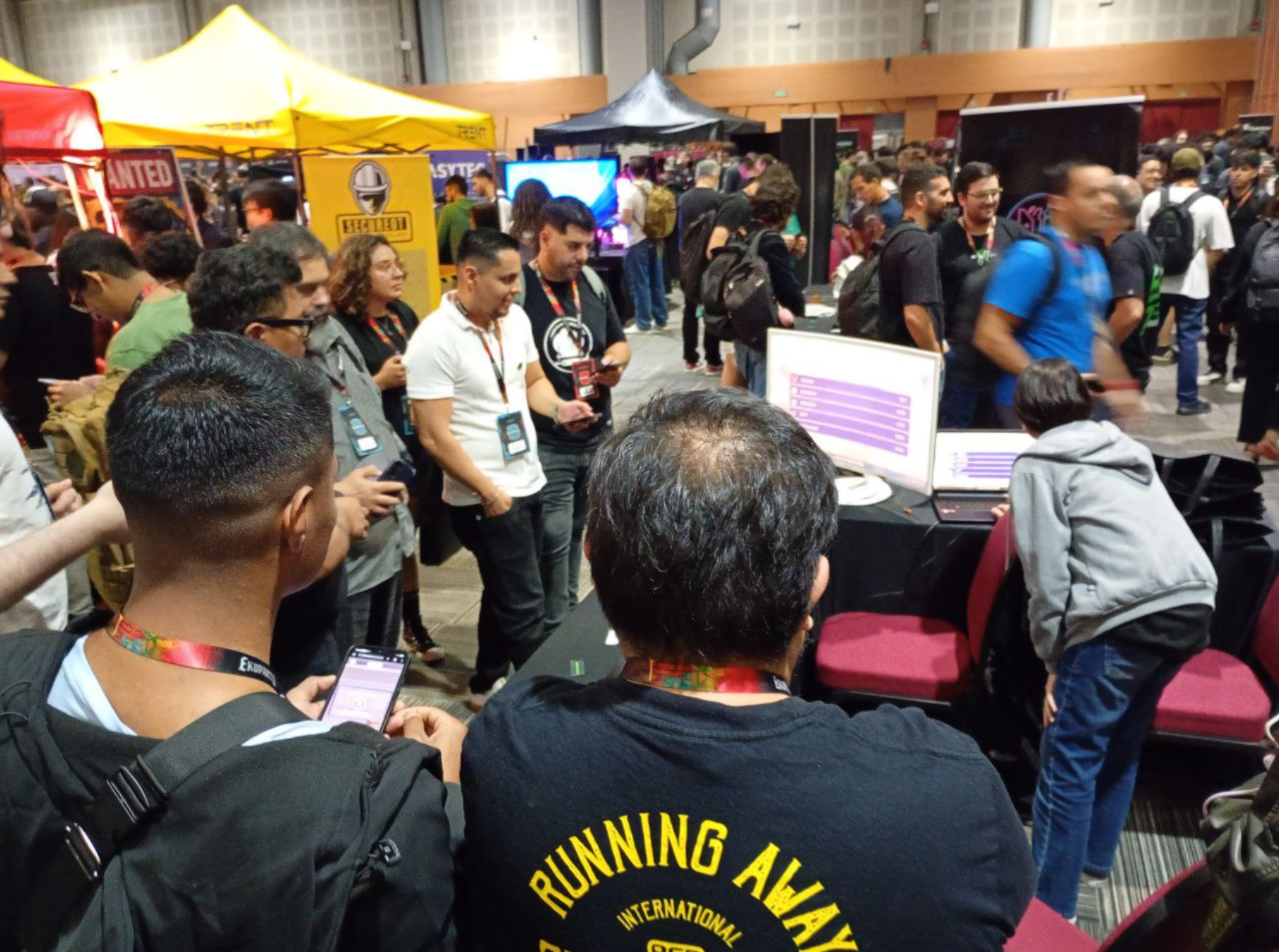
🗓️ Day 2
We continued with trivia and raffles while participants progressed through the beginner CTF challenges, and the advanced CTF was launched.
We also invited the community to join The Red Guild’s Phishing Dojo, a threat-simulation platform.
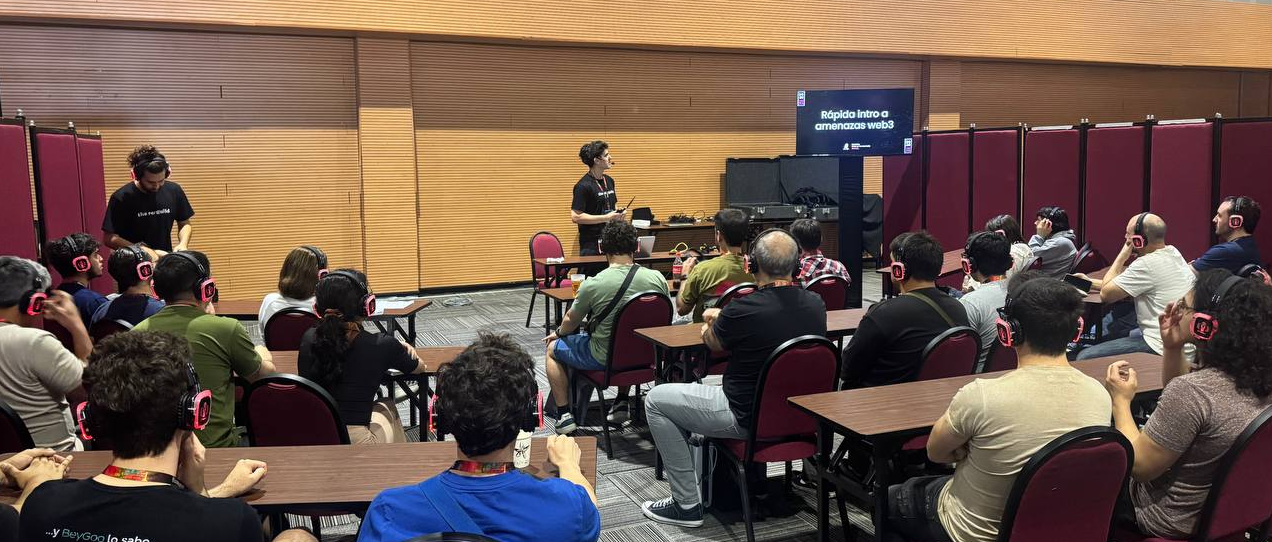
Talks of the day included:
- “Secure Future: Why Teach Blockchain and Cybersecurity in School?” – @cesaciondepagos
- “Quick Intro to Some of the Threats in Web3” – @d4rm_
🗓️ Day 3
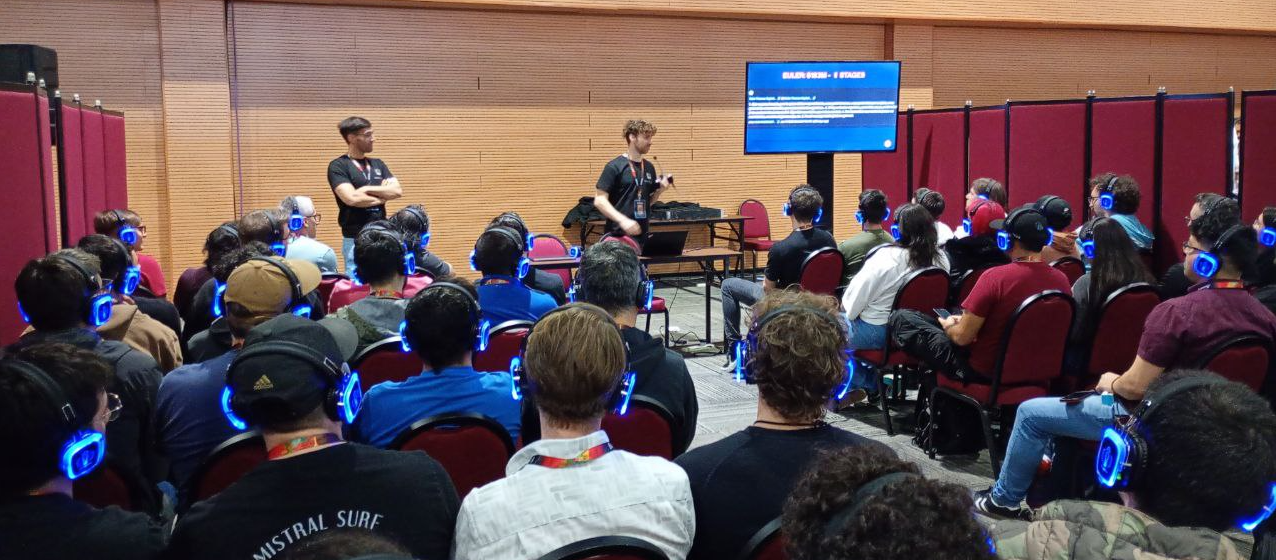
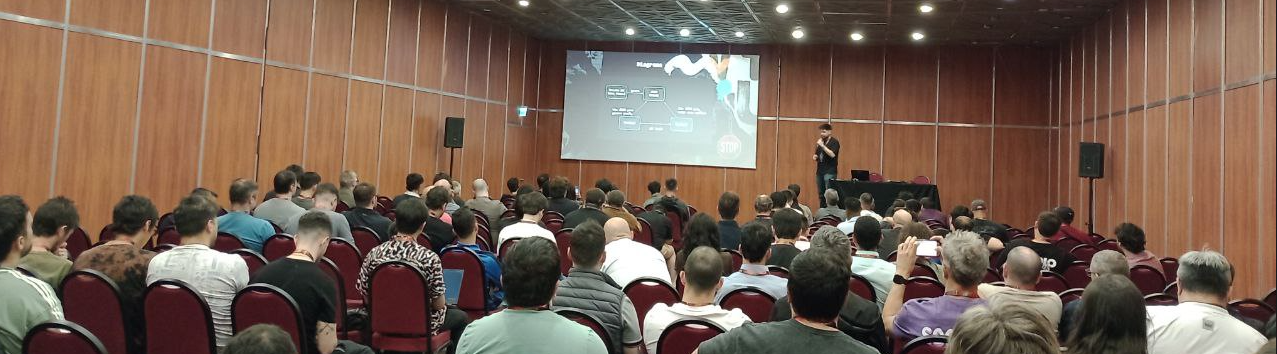
The final day was packed with talks:
- “Address Dusting & Poisoning Attacks” – @mrwildcat7
- “OpSec 101 for the Dark Forest” – @PabloSabbatella
- “Vulnerabilities in ZK Circuits” – @augustoQ_
- “Stealing Blackhats’ Lunch: Real-Time Interception of Exploits” – @snfernandez and @feliam from @Bitfinding
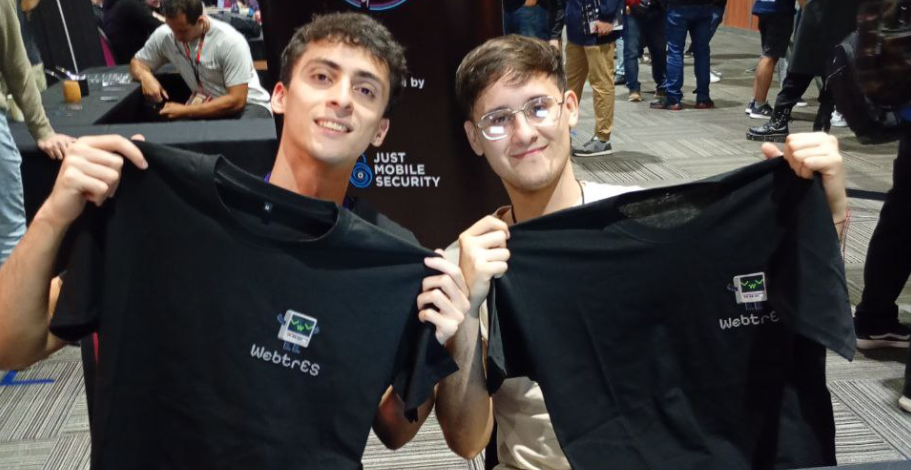
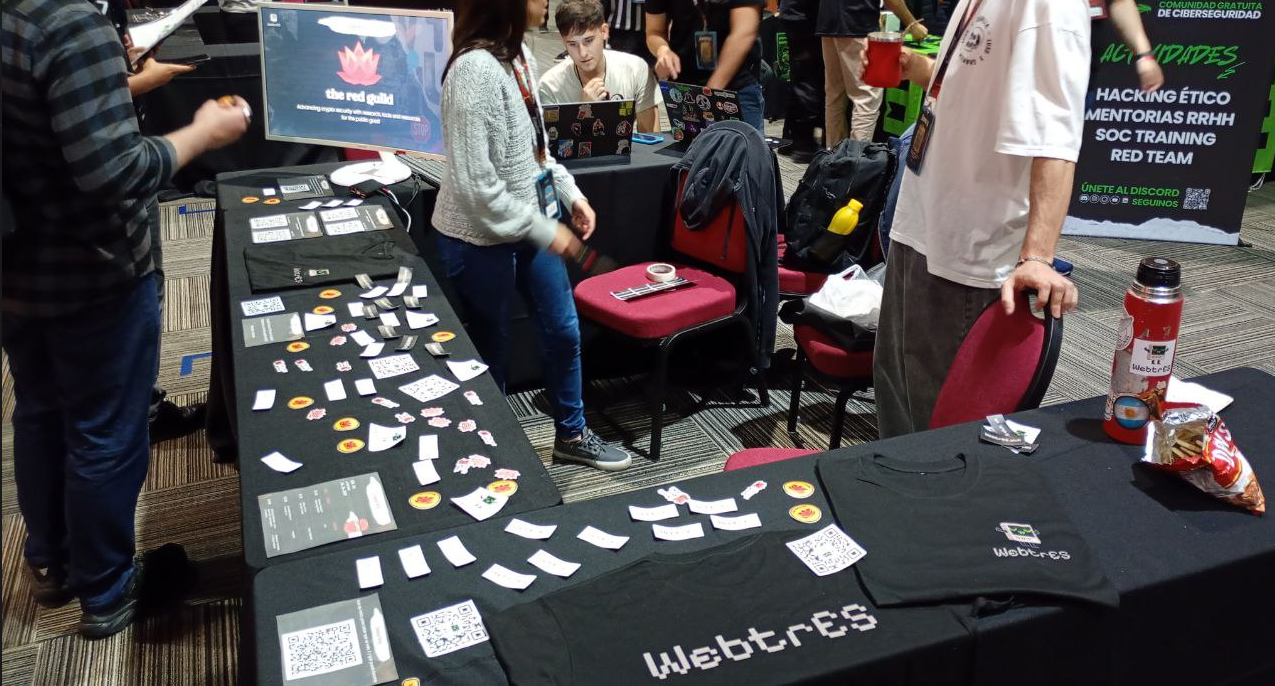
At the booth, we were thrilled to see many young people participating and solving their first CTF, earning a WebtrES Club T-shirt and an invitation to keep engaging with the community.
Acknowledgments
A huge THANK YOU to everyone who made this experience possible:
@martriay for trusting us to represent the WebtrES Club community and lending the village his POAP card.
@eugenioclrc for creating the CTFs, providing resources, and being present at the booth.
@rotcivegaf for designing CTFs and being present at the booth.
@crypto_dev_1 for filming the promo video, helping with organization, presenting his talk, and being at the booth.
@cesaciondepagos for active collaboration, giving his talk, helping at the booth, and supporting CTF players.
@augustoQ_ for joining the booth.
@mrwildcat7 for stepping up to give his talk and contributing to the organization.
@PabloSabbatella, @d4rm_, @snfernandez, and @feliam for presenting their talks.
@alandooz for managing social-media posts.
@ratatuitt for designing flyers, logos, and presentations.
@0xJuancito for his presence at the booth.
@aibaf8 and @mapacherrera for coordinating the Village organization and also leading the booth, slowly releasing our stickers so sticker-hunters wouldn't take them all at once.
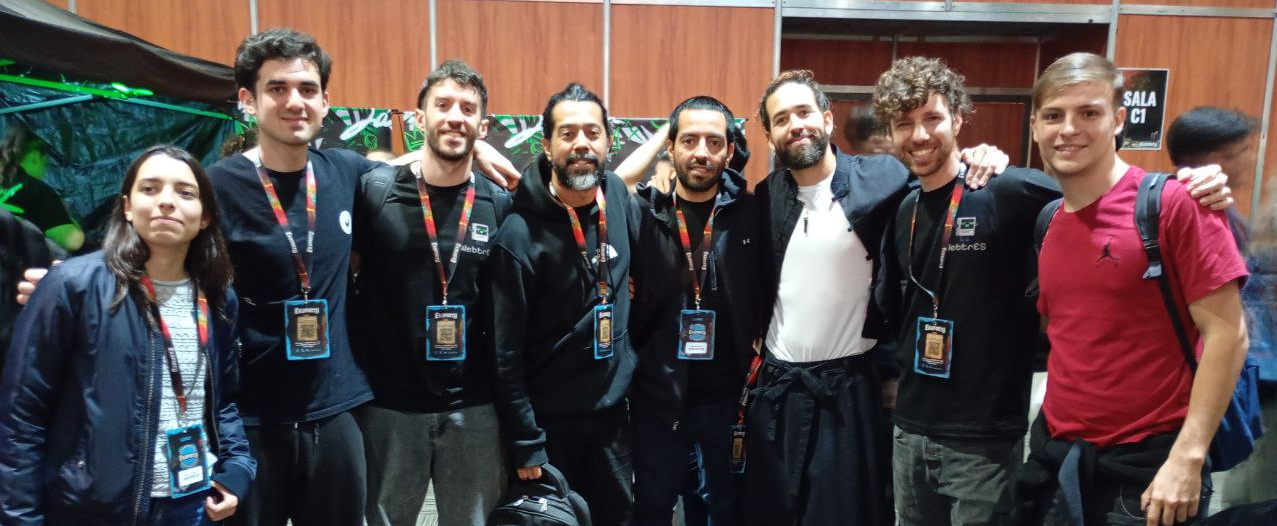
This project began several months ago, and seeing it come to life at Ekoparty was deeply rewarding. We believe this was only the seed of something much bigger. We’re already planning new CTFs, prizes, and activities for the next edition.
What would you like to see for the next year? Willing to contribute? Join WebtrES Discord!
Interview at LADO B (Spanish)
This interview with Leo hits right in the feels, talking about past times, with an old co-worker, Sabri, about the hardships the ekoparty had to go through when matta was leading content there in the middle of the pandemic.
If you'd like to understand our ethos a little better and why we believe there's room for The Red Guild to exist, we explain the key differences and weaknesses of the typical security approaches in our current ecosystem. After all, security is a business.
matta's motivational story at Hack The Talent Zone
The Hack The Talent Zone was a dedicated space at the conference designed to foster professional growth in cybersecurity. It supported newcomers entering the field, professionals exploring career changes, and anyone seeking mentorship from seasoned experts. Active throughout all three days of Ekoparty, the booth provided participants with direct access to key figures, organizations, and practical resources to advance their careers.
Its main goal was to bridge the gap between the hacker community and the industry—creating an inclusive, hands-on environment for dialogue and opportunity during the conference.
The organizers invited matta, whose recent transition back into the decentralized world includes founding a non-profit (TRG) and contributing to another (SEAL), within one of the most profitable sectors (crypto), believing his experience and perspective would resonate strongly with the community. And it did!
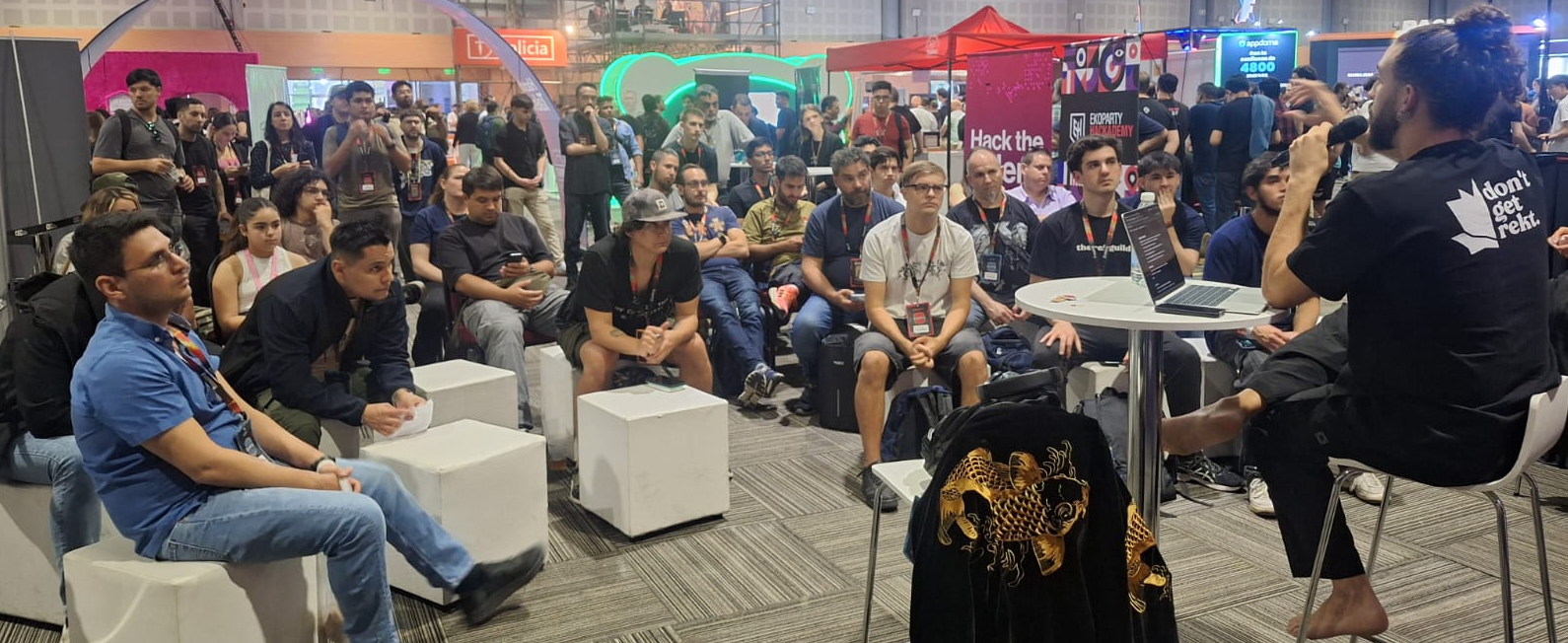
Thanks to Dani for coordinating this participation and accepting us exactly as we are! Quite a surprise to end up working with someone we recommended years ago, with the intent of including more social skills at the conference.
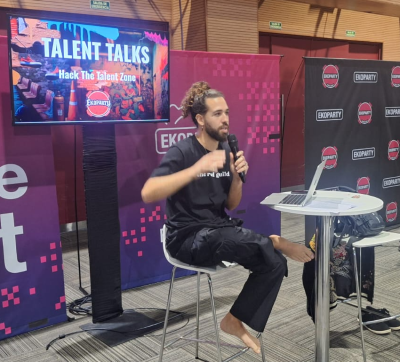
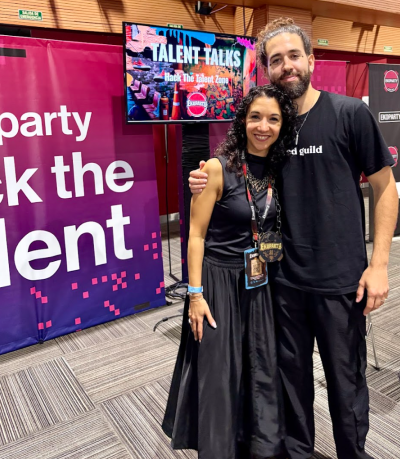
We have transformed matta's talk into a text version, translated into English in case you want to read it. We hope this makes you feel a little closer to us, understand us better, and motivate you through hard times.
This too shall pass — Persian Sufi poetry and Middle Eastern folklore
Future appearances
Thank you very much for joining us for a new update —quite specific this time. Devconnect and DSS are right around the corner, and we have many surprises for you!
We hope to release some really cool stuff as a public good, as usual. As a matter of fact, there will be a physical surprise for all participants who go to DSS :).
And before we forget! We'll be at the 101 of DSS on the 19th, with '101 ways of getting rekt'. It's in a different building, btw.
See you there!
Lore of The Red Guild?
These are the transcripts of matta's talk at Hack The Talent Zone at Ekoparty 2025. It involves his personal story, his involvement with the early ekoparty, the current ekoparty's legacy, and the creation of The Red Guild. If you'd like to read them in the original Spanish, you can access this public gist.
Chapter one
You can’t connect the dots looking forward; you can only connect them looking backward.
Year 2013. I was studying Systems Engineering. At one point in my career, I burned out. I burned out and got my heart broken. I burned out after spending too long doing things I believed were a waste of time. And I got my heart broken because, well, I gave too much to someone who didn’t know how to value it. I abandoned my thesis, dropped everything—except a few occasional clients so I wouldn’t end up on the street.
I started studying photography. That, along with musical theatre, brought me closer to stages and concerts, and I eventually began helping in festivals and event production in general. I received plenty of criticism for doing something completely unrelated to cybersecurity, but I felt it was what I needed at the time. I was conflicted and guilty because I didn’t understand what role this would play in my life—but I did it. And I truly enjoyed it (my parents, not so much).
I had been attending Ekoparty for a few years, always volunteering to help, participating actively in the community. Little by little, I started giving talks, workshops, suggesting activities, and giving feedback. At some point, Ekoparty started to grow fast and needed help. They were looking for someone to coordinate content and parallel activities, which we later called Hacktivities. Suddenly everything made sense: I had the perfect profile—I knew Ekoparty deeply, had firsthand experience, knew cybersecurity well, and was the exact target audience of the conference. But beyond that, I now also had production experience, which the role required.
Amid this whirlwind, in 2018, I saw that the first Ethereum event in Argentina—EthereumBsAs—was going to take place. I’d been wanting to get involved in the ecosystem for a while, but I had no clue where to start. I signed up for the event and went straight to volunteer. They kept encouraging me to “hack,” but I was sure I’d get more out of it by helping. Once accepted, I made it clear I wanted real responsibility. I had just created the first iteration of Ekoparty’s volunteer team, the Hotfixers, with their pink shirts—disruptive on purpose. Coordinating volunteers helped me meet lots of new people and talk about what I was passionate about: cybersecurity. I must have talked a lot, because a few weeks later, I got offered my first job in crypto—auditing the Solidity compiler. I was scared and uncomfortable, but I said yes. I thought I’d regret it.
Over time, I learned that growth comes from discomfort.
I finished that project as a contractor. Then came a job offer—I felt I’d finally entered the game. Great pay, but with conditions: they asked me to drop my clients, the same ones who had kept me afloat for years. I accepted. No risk, no reward, right?
Three months later, on January 3rd, they fired me.
I started the year crying, jobless, and full of uncertainty. That job was where I met tincho—a good person, ambitious, and we clicked from day one. Losing that job felt like a terrible blow.
Note to readers: I am still in an excellent relationship with all my former coworkers and that organization. Everything is a lesson!
I had two options: stay angry and play the victim, or use that frustration to move forward. Fortunately, because the firing happened a few days after my three-month mark, I think?, I got severance pay.
With so much free time and no clients, I was losing my mind. I thought of something unthinkable:
“Could I finish my degree before the money runs out?”
That's how I spent the entire year focused on saving money and grinding through university. I finally graduated on December 27, 2019, under very particular circumstances. My thesis? Well, let's say I really took advantage of the Solidity compiler experience, delivering a critique of the state of the art of Software Audits, aimed at compilers, with a case study on Solidity.
At that time, I was also deeply conflicted. A new year was starting, and I was once again jobless. Having the degree didn’t guarantee a position in security. After so long without clients, insecurity crept back in. Graduation felt bittersweet.
A week later, Leo Pigner—one of Ekoparty’s founders—called me and said he wanted to turn Ekoparty into a whole organization, not just a conference. I accepted immediately. Happy to finally merge my production and technical experience, we launched several projects, including regional events starting in Córdoba. It was early March, and everything seemed to align with a master plan...
Two months later, the pandemic hit.
Ohh, the discomfort!! Amid the uncertainty, we had to reinvent ourselves. I started thinking: what can we take from this mess? One of my best ideas was something we couldn’t do before at our old venue, Konex, due to the physical space: creating the villages. It was only possible because, in the virtual format, it didn’t matter where people were or how much space they took. I found community leaders to represent different topics, and the results are visible all around us today.
I resigned from Ekoparty in 2022, a few months before moving to CEC (current venue), because I wanted to work in crypto. Some of my friends were already in the Ethereum ecosystem, and I wanted to be closer to them. I believed—and still believe—in the technology. What blew my mind was the concept of a flash loan: something impossible in traditional finance. In a single transaction, you can borrow large amounts of money, use them freely, and repay them with a small fee—all programmatically, with no risk of failure. On top of that, Ethereum changed its block validation mechanism and reduced its energy consumption by 99.99%.
I wanted to join the ecosystem but didn’t know how. I decided to start studying smart contract security and publicly share everything I learned—my roadmap. I went back to conferences. I didn’t know how it would help, but it made me feel better and more confident. I solved CTFs, wrote deep analyses that caught attention, and soon connected with the webtrES community, which I now sponsor through the company I co-founded with Tincho months later.
Life’s twists, huh?
I could go on and on… but there’s a short Chinese story I love that sums up how I see things now.
The Chinese Farmer Story
There was a farmer who had a horse he used to plow his fields. One day, the horse ran away. The neighbors came to console him, saying, “What bad luck!” But the farmer replied, “Good luck? Bad luck? Maybe. Who knows? The only fact is—the horse ran away.”
A few days later, the horse returned, bringing with it a wild mare. The neighbors rejoiced, saying, “What good luck!” The farmer said again, “Good luck? Bad luck? Who knows?”
Later, the farmer’s son tried to tame the wild mare but fell and broke his leg. The neighbors said, “What bad luck!” The farmer said, “Who knows?”
Soon after, war broke out, and all the young men were drafted, except the farmer’s son, because of his injury. The neighbors said, “What good luck!” And the farmer said, “Who knows?”
The moral: events themselves are neither good nor bad—it’s our opinions that give them value. Only time shows their true meaning.
You are not what happens to you—you are what you do with what happens to you.
Chapter Two
Between 2004 and 2006, I found refuge in online games—Argentum Online and Ragnarok Online. In both, through dedication and exposure, I ended up taking on important roles. I understood the meaning of community and how something born from leisure and fun, if taken seriously, can turn into a deeply personal growth experience. That’s when, as a teenager, I first grasped the value of volunteering and doing things for the common good.
One of the most important moments came when I discovered that sometimes the server went down because someone had taken it down. That’s how I met VolkS and his “TurbinaS”—basically DoS attacks flooding the server with sockets until it crashed. Most people were terrified of him; we were told not to contact him because he had what was called “Zero Tolerance”—meaning instant ban on sight.
One day, talking with my life-brother Pato, he mentioned he knew VolkS' email and suggested I write him; he was sure VolkS would reply. Not only did I write to him, but we started chatting daily and got along incredibly well. Strangely enough, what connected us the most wasn’t tech but sharing our everyday life struggles. I’d found someone as crazy as me. He invited me into a small hacking group. That’s where I learned about botnets, became your typical script kiddie, and later co-founded another group of a similar nature, which would later end up being renamed to MFSec, which also turned out to be the start of something far more meaningful than I could’ve imagined.
In 2007, I dropped out of Engineering for the first time (yes, there were several times). This time, they told me the degree “just wasn’t for me.” With the help of alcohol and benzodiazepines to sleep, I drifted through my days—between psychiatrists and psychologists—trying to find meaning. My mom, desperate because she didn’t know what else to do with me, one day sent me a news article from an Argentine outlet mentioning a company that had reported something important about DNS.
I didn’t quite understand who they were, but since it was Argentine news, it caught my attention. I emailed the company in English to ask whether they had study materials or readings in Spanish, since not everyone in our hacking group spoke English. Back then, getting information wasn’t as easy as it is now—you basically needed a mentor or you were screwed. I gathered the courage to send that email, and minutes later, a chat window popped up with someone writing: “Por qué no hablamos en español mejor? ;)” (roughly translates to: "Wouldn't it be better if we speak in Spanish ;)?")
I’ll never forget that sentence. The person who replied was Francisco Amato, one of Ekoparty’s founders. Some time later, he and Federico Kirschbaum invited me to the next edition at the Borges Cultural Center. We showed up nervous as hell—me, 19 years old, mentoring some kids like Nico T., who was 13.
Through CTFs, playing with friends, and having fun, I started taking on leadership roles, mediating conflicts with judges. That got Fran and Fede’s attention, and two years later, at 21, they offered me my first internship at a cybersecurity company, Infobyte. I participated in creating Faraday—which probably and hopefully no longer contains my code today, but remains a fond memory.
Later, during another stage of my university life, I began having problems during exams. I’d get so nervous, I’d feel sick as soon as I received the paper. Asking to go to the bathroom meant handing in the test—and failing. I started wondering how the hell I could keep progressing being that scared. Then it hit me: what if I convinced as many professors as possible to let me submit final projects and defend them instead of taking exams?
Professor: “I’ve never accepted a final project for this course. I can’t make an exception for you; otherwise, everyone will want to do the same.”
matta: “Professor, sorry to say this, but I don’t see anyone else here. And in complete honesty, may I ask—what’s the goal of your class?”
Professor: “Well… that you learn the topics of the course.”
matta: “Then I promise the best way I learn is by applying what I know in practice, even if it takes me more than a month. I’d rather that than sit three hours once with a piece of paper, feeling sick.”
I convinced professors to allow things they said had never been done before—like passing two final subjects with a single project, sometimes even without being formally enrolled.
Fast forward to today, and now connected with crypto. tincho and I decided to work under a very particular model: we created a non-profit organization and asked the Ethereum Foundation for funding to explore what it would mean to build security for the ecosystem as a public good. Me—an outsider to the ecosystem—approaching the Ethereum Foundation with a proposal asking for money to explore what doing security for the common good could mean? I thought I had no damn chance.
I was wrong.
All of this taught me something:
Even the biggest doors open for those who knock.